Caution: Boring historical themes
Whilst Mark tackled the Vogues mountains, the kids and I explored Colmar and started to grasp its rich history.
"From the early thirteenth century the city was a Municipality and it was under Frederick II with the rank of 'imperial city'. In 1262 Colmar was again under the dominion of the bishop of Strasbourg, but the city, with Walter Roesselmann and the help of Emperor Rudolf of Habsburg (1218-1291) managed to dismiss the troops of the Bishop of Strasbourg.
Between the fourteenth and fifteenth century, Colmar had a life quite independent and peaceful under the imperial protection and it developed new civic and religious buildings. The city still remained under imperial rule throughout the fifteenth century.
In the second half of the seventeenth century, after several years of Swedish rule, Colmar entered the Kingdom of France, but after 1871 (with the defeat of Napoleon III), the city returned to Germany until World War I. It was then reoccupied by the Germans during the World War II, but returned to France at the end of the war."
As a result, Colmar is a real mix of France, Germany and Sweden. The buildings are so beautiful and colourful.

First, we went to the Hansi Musee just near our apartment. Hansi (Jean-Jacque Waltz) lived from 1873- 1951 in Colmar when it was German, French, German and then French.

His painting of Colmar children and landscapes are well known and are on mugs, tea towels, key rings and mustard jars! Every souvenir shop has a large amount of Hansi inspired merchandise.


But it was his political messages and his use of art to undermine the Germans that was really fascinating. In 1913 he published Mon Village which described the daily life of a village in Alsace and poked fun of the German authorities in a sarcastic manner. He was found guilty of incitement to violent resistance in July 1914 but was able to flee to France to the French army. In France he made anti-German propaganda. After WW1, he returned to Colmar. When WW2 was declared in 1939 he fled to the south of France as he was so well known for his anti Germanism. In 1941 he was beaten and left for dead by the Geatapo. He found refuge in Switzerland and returned to Colmar at the end of the war.


Once you understand more about him, you are not so impressed by the quaint pictures of boys and girls that are all around Colmar.
To keep our calorie count balanced I took the kids for a run which was promptly followed by some glacé . Holly found this magnet that made her laugh so much we had to buy it.


The glacé fuelled our walked to the much anticipated covered markets. These were supposed to be the food highlight of Colmar, but were found seriously wanting. We of course had to try the Brezels for lunch and enjoyed walking back through the beautiful town.


Addendum:
The next part of our history we learnt about today involved the Statue of Liberty. As you drive into Colmar you are greeted with this..

Augusta Bartholdi, was the French Sculptor who designed the Statue of Liberty was born in Colmar in 1834. The Statue was a gift from the French people to commemorate the alliance of France and the US during the American Revolution. The gift was proposed by Edpuard de Laboulaye to commemorate the perseverance of freedom and democracy in the US. They hoped by calling attention to the achieve,ends of the US, then the French people would follow the US and create their own democracy rather than the repressive monarchy.
This blurb from United States National Parks is really interesting as it is a similar idea to the exhibition we created in Canberra regarding the Magna Carta.
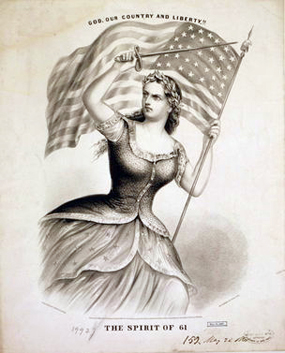
""Liberty" was a controversial idea in the 19th century. To many people it suggested violence and revolution. Laboulaye and Bartholdi agreed that their monument should not be seen as leading an uprising, but rather as lighting the way, peacefully and lawfully. A key element was the name they gave to the Statue: Liberty Enlightening the World. Bartholdi's public monuments hailed back to classical images of a powerful, honorable national authority over any ideology. His statue of "Liberty Enlightening the World" would be above conservatism and liberalism and above radical revolutions and political turmoil. She would be an international symbol of liberty, justice, and democracy. In 1871, the Statue was transformed from idea into reality - it was to be funded, built, and presented to the United States.
... The creation of the Statue of Liberty, however, was a chance for Laboulaye to restore his reputation as a devoted liberal and democratic advocator, honor the success of liberty in the United States, and hope that the French would be inspired to fight for the same ideals."

Very interesting reading - I feel a few school projects coming on!
ReplyDelete